.png)
Are Solar Panels Worth It for Schools? The Case For and Against
- School Buy

- 6 days ago
- 3 min read
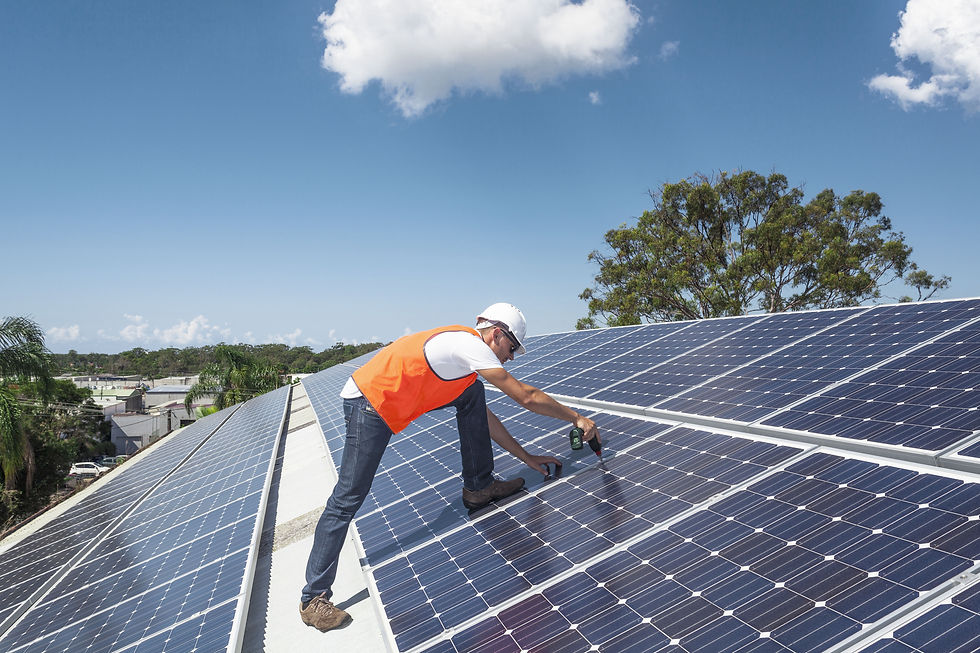
For school leaders, solar panels are not an environmental gesture but a capital decision requiring the same financial rigour, risk analysis and long term thinking as any major estates investment.
Rising energy costs and tightening public sector budgets have pushed school estates decisions firmly into the boardroom. Solar panels are increasingly promoted as a solution to both financial pressure and sustainability commitments. Yet for school leaders, the question is not whether solar energy is desirable, but whether it represents a sound investment of scarce capital. The answer is nuanced and depends on financial modelling, building suitability and organisational appetite for risk.
Research from the Department for Education and the National Audit Office shows that energy costs now represent a material and volatile component of school expenditure. Schools that fail to manage this risk face structural budget pressure that directly impacts staffing and provision. Against this backdrop, on-site generation has become a serious strategic option rather than a peripheral environmental initiative.
The Case for Solar Panels in Schools
The financial argument for solar rests primarily on long term cost avoidance. Data from the Energy Saving Trust suggests that public sector organisations with appropriately sized solar installations can reduce grid electricity consumption significantly, particularly where daytime demand is high. Schools, with predictable occupancy and daytime usage patterns, are well suited to this model.
In addition, solar panels can improve budget certainty. By generating a portion of energy on site, schools reduce exposure to wholesale energy price volatility. Over a 20 to 25 year asset life, this stability can be as valuable as headline savings. There are also reputational and educational benefits. Sustainability credentials increasingly matter to parents, communities and pupils, reinforcing organisational values and curriculum priorities.
Solar investment succeeds where leaders treat it as an estates and finance strategy, not a sustainability statement, grounding decisions in data, demand profiles and long term risk.
The Case Against and the Risks Involved
However, solar is not universally viable. Capital cost remains the primary barrier. Even with falling panel prices, upfront investment is substantial and payback periods can extend beyond leadership tenures. Research from public sector estates reviews highlights the risk of underperforming installations where roof condition, orientation or shading are suboptimal.
Maintenance, inverter replacement and insurance implications are often underestimated. Poorly specified systems can erode projected savings and create long term liabilities. Importantly, opportunity cost must be considered. Capital deployed into solar cannot be used for urgent building condition issues, digital infrastructure or teaching capacity.
Making a Board-Level Decision
High performing trusts approach solar with the same discipline applied to any capital project. They commission professional feasibility studies, model multiple energy price scenarios and stress test assumptions. Crucially, they align investment decisions with wider estates strategies rather than acting opportunistically.
Solar panels can be worth it for schools, but only when the case is built on evidence, not aspiration. For boards, the strategic question is not whether solar is good, but whether it is right for their buildings, budgets and long term priorities.
School Buy is a UK publication providing practical insight and guidance for senior education leaders, helping decision-makers navigate leadership, finance, governance, and operational challenges with confidence.
We deliver expert analysis, sector news, and practical solutions tailored to the strategic, financial, and operational realities of schools and academy trusts across primary, secondary, and higher education.